

To be concise, targeted and successful your CV should not include unnecessary details like your Personally Identifiable Information (PII), headshot photographs, long introductory paragraphs, leisure activities and references. Irrelevant information along with overly elaborate language takes up valuable space and can bury your strongest points in a pile of superfluous text and words. This is why you should also avoid padding out a piece of writing (also known as obfuscation or obscuration) in a way that hides its meaning and value.
Although it can be tempting to impress an employer by packing as much information as possible onto your CV, doing so can often have the opposite effect. Hiring Manager will only skim a CV for an average of six seconds before coming to a decision. It’s vital that you don’t therefore weigh your CV down with outdated job roles, needless headings and details about your religious, sexual or political affiliations. Combined all of these can make what a recruiter is looking for harder to find.
In conclusion, while many candidates concentrate on what to include, it’s just as vital to know what to leave out.
By: Iejaz Uddin – Updated: 30 July 2026
List of what not to put in your CV:
- Personally Identifiable Information (PII): This includes official identification and digital footprints such as passport numbers, driver’s license details, National Insurance or Social Security numbers and health records.
- Headshot Photographs: Can lead to unconscious bias and may fail an Applicant Tracking System (ATS) test as some companies’ flat-out reject CVs with photos.
- Long introductory paragraphs: Lengthy blocks of text can turn off readers and hide valuable information you want to be seen.
- Spelling, punctuation and grammatical errors: These mistakes can signal a lack of attention to detail and professionalism to recruiters.
- Outdated jobs: Exclude or just briefly outline older roles as well as part-time or summer jobs from 12 years ago unless relevant to the vacancy.
- Leisure activities: Leave out passive interests like watching TV, walking the dog or “cooking” and “listening to music”.
- Social Media Accounts: Don’t include links or handles to personal, lifestyle or political Snapchat, TikToks, Instagram or Twitter (X) accounts.
- Your health details: In the UK under the Equality Act 2010, employers cannot discriminate against candidates based on disabilities or health conditions.
- False or Misleading Information: Never lie about experience, inflate Job Titles, exaggerate skills or list fake degrees. You can be easily found out and immediately dismissed.
- Reasons for leaving: Do not bog down your CV with explanations or reasons as to why you left previous employers.
- Religion, sexuality or political affiliations: This information is completely irrelevant to your professional abilities and may unintentionally introduce unconscious bias.
- Bizarre fonts: Decorative, or novelty ones like Comic Sans not only look unprofessional they can also disrupt reading flow and often confuse Applicant Tracking Systems (ATS).
- Unnecessary headings: Remove redundant section titles that take up valuable space and distract eyeballs away from your real professional value.
- References: At this stage of the application process, there is no need to give the names and contact details of former managers or colleagues who can vouch for your skills, character, and work ethic.

Common mistakes to avoid
Personal Details
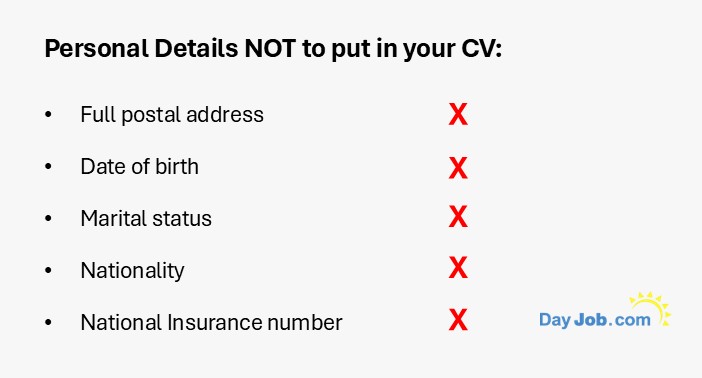
Leave out private personal information like your full postal home address (just city and county will do) date of birth, marital status, nationality and National Insurance number.
Excluding sensitive details such as this protects you from identity theft and any unconscious bias in Hiring Managers without them realising it. Additionally, it may also confuse applicant tracking systems (ATS), and waste valuable space.
- Date of Birth: From your DOB some recruiters could easily think you’re too old to cope, or too young to do the job properly.
Headshot Photos
In the UK and many other English-speaking countries there is no requirement to include a headshot photograph. It helps ensure a fairer hiring process by focusing attention on your skills and experience rather than appearance. Excluding photos can protect your privacy, help safeguard your personal data from unnecessary exposure and help ensure a fairer hiring process.
A CV must stand on its own merit, without your looks playing a role. Including a picture can lead to unconscious bias by Hiring Managers, something responsible employers are wary of as it is illegal for recruiters to favour candidates due to their age, gender, or ethnicity.
Photos can not only can draw attention away from your experience and strengths, they can also affect Applicant Tracking Systems who can struggle to process documents containing photos.
Long introductory paragraphs
A long-winded introduction can lead recruiters to quickly feel overwhelming and lose interest in what you are saying. Instead aim to break long boring paragraphs into bite-sized chunks of valuable information that are suitable for a rapid recruiter scan.
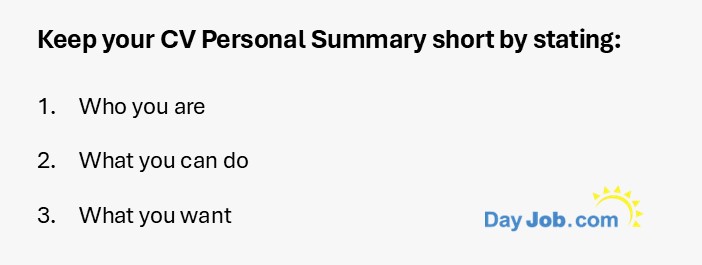
Brevity is critical to retaining user attention and preventing the page from looking cluttered. In an opening paragraph simply state who you are, what you can do and why you want the job.
Use a clear typographic hierarchy for readability and keep it engaging by using words that are punchy and direct. Start with a topic sentence (The Hook) to introduce your main points, the a supporting sentence (The Body) with evidence and conclude with a call to action (The Wrap-Up) that summarizes what you want.
Your failures
Your CV is a curated marketing document and not place to list direct failures, rejections, or weaknesses. Employers do not search your CV looking for a list of regrets, so don’t document personal failures whether professional, or otherwise.
Do not tell employers about failed projects, short employment gaps or incomplete degrees, poor grades or unfinished education. Instead, its where you should only highlight your workplace achievements victories, skills, and tangible results.
Never use the words “failed”, “tried” or “unsuccessful, rather reframe any challenging situations in a positive manner as lessons learned, skills gained, and what went well.
Bizarre fonts
A poorly selected font can derail your chances of winning an interview, even if you are suitable qualified. Bizarre, stylized, or novelty fonts can set a subconscious tone for the reader, and consequently destroy the positive image you are trying to present of yourself.
Avoid using fonts like Papyrus, Comic Sans MS, Courier, Impact, Jokerman and Lucida Console. Instead use universally supported, clean looking professional fonts that are easy on the eye like Arial.
You want a contemporary typeface that not only offers excellent legibility and readability, but are suitable for laptops, mobile phone screens and printed paper.
Unnecessary headings
Headers are signposts to the reader to make your CV easier to navigate. They clearly divide a page into professional sections that allow recruiters to quickly scan your experience and skills. Having the wrong ones can clutter your CV and confuse the reader. Furthermore, as they are naturally larger than the rest of the text on your CV, usually between 14–16 pt they take up more room and waste valuable space.
Headings to avoid in your CV:
- Hobbies
- Objectives
- References
- Curriculum Vitae
- CV
- Early Career
- Volunteering
- Publications
- Professional Development
- Awards
- Professional Memberships
- IT Skills
- Languages
Main headings to include:
- Contact details
- Personal summary
- Career history
- Skills
- Education
Leisure activities
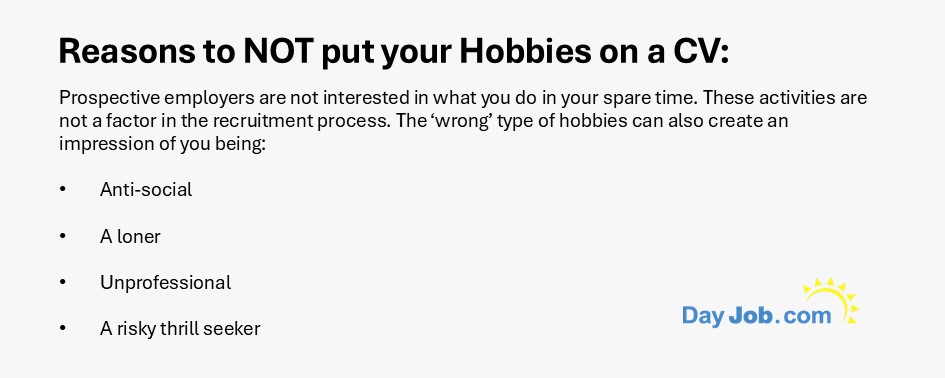
How you spend your time outside work will not be a factor in any recruitment process or decisions. If you include them in your CV then you risk triggering unconscious bias because some hobbies can reveal personal details, political beliefs, or polarizing lifestyle choices. Furthermore, if your pastime sounds dangerous then a recruiter may think it could injure you and affect the chances of you showing up for work. For instance, interests like caving, boxing, long-distance running and solo climbing sound risky and unsafe.
These activities rarely translate to the specific technical or managerial competencies needed for a role. Unrelated or controversial ones are best left off. Instead showcase ones that demonstrate impressive achievements like competing in a one-off marathon. They should only be included is they compensate for a lack of formal work experience or if they highlight transferable soft skills teamwork, communication, leadership and collaboration.
Social Media accounts
Your social media accounts can be a barrier in getting a job interview. It’s standard practice to leave your personal social media off your CV, unless you are applying for a specialized role like Social Media Manager. You should leave off any personal Facebook, Snapchat, TikTok, or Instagram accounts as they may display content a recruiter might deem unprofessional.
Bear in mind that these days Hiring Managers will Google your name regardless of whether you include links. Therefore, it might be wise to make your personal social media accounts private and locked down so that your pictures, comments, and opinions are visible to friends only.
The only account you might want to share is a LinkedIn Profile which can be hyperlinked cleanly in your contact header. Another time to upload these accounts could be a Portfolio, which can be used by creatives, website developers and writers to showcase their professional work directly.
Outdated jobs
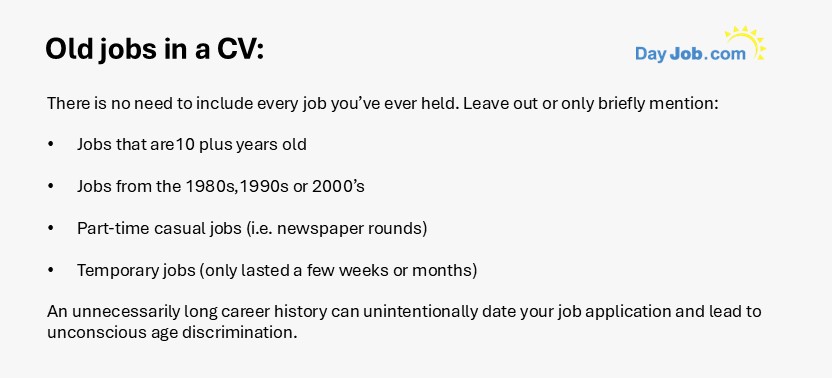
As a rule of thumb, in your CV only list your most relevant work experience from the last 10 to 15 years. Keep your CV modern by excluding old, irrelevant, or short-term jobs from your past career, thereby leaving more room for current roles.
Unnecessarily long employment histories can unintentionally date your CV and lead to ageism. Removing posts from the 1980s or 1990s is one way to prevent unconscious age discrimination.
Although there is no need to include every job you’ve ever held, you should not omit relevant jobs or information that will cause an employer to be misled. For instance, is you’ve been fired from a previous job or left one on bad terms.
Including older jobs: If you want to list them group older, less relevant experience under an “Additional Experience” “Previous Experience” or “Early Career” section.
Religion, sexuality or political affiliations
In the world of job hunting there is nothing to be gained from wearing your politics on your sleeve. That’s because, unconscious bias can still happen if an employer’s personal views do not align with yours. The reality is that some employers may harbour personal prejudices against certain views.
These types of topics are considered to be private and are considered inappropriate for a workplace setting. Including any of these details in your CV can distract from your career achievements and unintentionally may expose you to bias or discrimination.
False or Misleading Information
Never insert false information, such as fake qualifications, certifications, or exaggerated job titles in your CV. Employers in every industry place a high value on integrity, and any falsehoods that are discovered can lead to serious consequences, including job termination or loss of professional licensure.
Spelling mistakes
This is the no. 1 reason for instant rejections when it comes to CVs and job applications. Typos, poor spelling and grammatical mistakes can severely damage your job prospects.
Whilst some employers may overlook, a single minor typo, they will immediately reject a CV with a catalogue of obvious errors. Mistakes like these can create an immediate negative impression and raise doubts about your ability, lack of attention, professionalism and desire for the role.
- Double check: Go over what you’ve written by getting a second pair of eyes to read it, such as a friend, mentor or work colleague.
Reasons for leaving your previous jobs
There is no reason to explain why you left previous jobs. Without in-depth explanations and proper context, they are often misunderstood and may raise more questions than they answer.
Writing things like “role made redundant,” “fired,” or “toxic work environment” can cause recruiters to make the wrong assumptions. If they are not explained tactfully, they can shape a interviewer’s first impression negatively, so there’s no point risking it.
You should leave any discussion about your departure for later in the hiring process. Reserve explanations for interviews, where you can frame departures constructively by using neutral, forward-looking language.
References
Although references are important, they are only really needed later in the hiring process, typically at or after the interview stage. By including them you can trigger red flags in some Applicant Tracking Systems or CV robots. An ATS may misread the names and phone numbers of your references as your own personal contact details. There have been cases of referees being contacted prematurely by automated messaging systems.
Leaving them out also protects the privacy of your contacts and avoids their details being leaked to third party marketing companies.
On your CV, a straightforward ‘References are available upon request’ at the bottom shows that you have them and can provide them.
- Data privacy: Remember that is you uploading your references’ personal information to public databases, it may compromise their privacy.
- Premature contact: Prospective employers or automated software might annoy them by contact your references before you have been offered the role.