

You must read a job advert thoroughly to find out what work experience, skills, qualifications, training and attributes an employer wants in a candidate. Do not quickly skim or scan the text, instead go through it carefully looking for specific information and descriptive keywords or phrases that you can include in your own CV. Look for job duties and requirements to get a real insight into what the hiring company is seeking.
Aim to read the whole thing in detail, like a menu at a café or when you are looking for a contact in your phone. If you don’t then you’ll miss important details that can be the difference between success and failure.
On this page we’ll explain how you should properly read analyse job advertisements and mine them for information that can boost your job application.
By: Iejaz Uddin – Updated: 30 July 2026
Page overview:
- How to read a job advert
- What is a job advert
- Why read a job advert
How to read a job advert
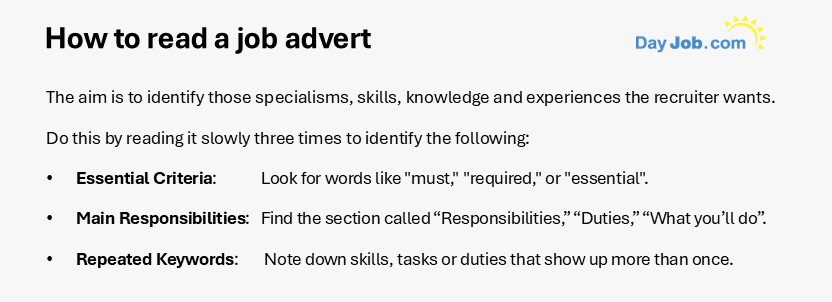
Although deciphering a job ad can be tricky, it’s not impossible and well worth the effort. Many adverts are filled with jargon, which can leave you confused as to what the employer is actually looking for. The trick is to read it carefully and identify those specialisms, skills, knowledge and experience the recruiter wants.
Reading a job advert will help you to;
- Target and match your CV to the requirements of the employer.
- Save time by stopping you from applying for jobs you are not suitable for or have no chance of getting.
- Only apply for jobs that you have a chance of getting.
- Determine which jobs suit you.
- Quickly determine what an employer is looking for, and the type of person they want.
- Find out if you are suitable for the job. You can quickly list all of the skills required and then decide if you have these.
Don’t quickly scan or skim
Never rush reading a job advert. Speed-reading job description can lead to missing keywords and failing to identify the recruiters needs. Don’t just scan, instead look closely for keywords. You need to read between the lines, as some of the adverts can seem very vague at first glance. Review the full job posting at least three times slowly to glean and decode information that many not be apparent at first.
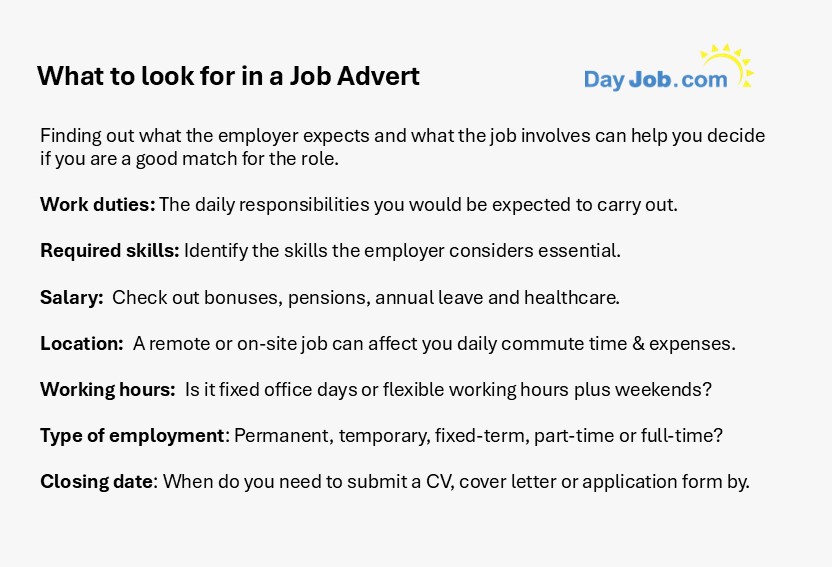
The job description can give you a good insight into what criteria the employer wants from you along with the skills and qualifications required for the role. Analysing it carefully is an excellent way to find out what a company requires from a candidate. If you can correctly interpret this document, it will tell you how to write your CV, Resume and Cover Letter.
Find out what’s the company culture is like
What’s the general style of the advertisement? Is it formal, low key, creative. Does it use a lot of technical wording. This will give you a feel for company’s core values, beliefs, and behaviours that dictate how it operates. Find out if they value teamwork and employee engagement or are they more rigid and structured.
Look for descriptive keywords
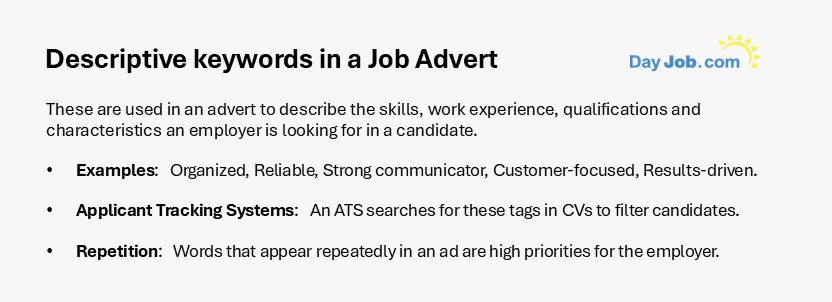
List the exact terminology used to describe any skills, tools, and traits that are mentioned multiple times or emphasised in any way. If they are, then these are what employers are looking for to gauge a candidate’s fitness. Words and phrases that appear 2 or 3 times in a single posting are usually top ‘must have’ priorities for the employer.
When writing your CV use these exact words in it to ensures you pass any automated Applicant Tracking Systems (ATS).
Short job adverts vs long job descriptions
Many online jobs sites use short job ads to attract your attention, with a link in it to a longer and more descriptive in-depth job advertisement. These short ones will only give you brief information just to get you interested. If this is the case, then make sure to read the full job or role description and visit the organisation’s website. Remember that the devil is in the detail, the more information you have the better.
Print out the job advert
To really go over it, consider printing out the job advert. Then with a pen highlight those keywords and phrases that describe particular skills that are being specifically asked for, or which you think they want. This is another way to ensure you don’t miss anything out.
What is a job advert
A job description, also known as a job posting or advert. Employers advertise job adverts to attract suitable candidates and ensure they don’t receive applications from unsuitable applicants. Each job ad is different ane not all job postings are created equal.
Jobs adverts are a vital part of the recruitment process. Employers use them to sell jobs and attract the best candidates. They can also be an excellent source of information that job seekers can use to extract key data that can increase their chances of success.
These advertisements are written by HR departments or recruitment companies, and are designed to attract the best qualified candidates for a specific vacancy. Their aim is to give prospective candidates a clear understanding of a role and its purpose. They usually consist of a job title as well as a job description and will have details about the salary, closing date and how to apply i.e. “No phone calls”, “Apply by email” etc.
A job advert will have all of the below information:
- Name of the organisation
- Job title
- Salary
- Experience and skills required
- Duties and accountabilities
- Essential requirements and desirable criteria
- How to apply
- Closing date
What do companies want from a job advert
They do not want a huge response as it can take a lot of time to sift through all the applications. Instead they want to attract a small, select group of the best candidates.
Why read a job advert
Understanding a roles requirements and decoding what the recruiter wants can stop you from applying for jobs you won’t get and maybe don’t want. An accurate reading and understanding of an online job advertisement is also essential for preparing your job application.
One of the most common mistakes that job seekers make is not to properly read these and then not customising their CV to the job by failing to mirror the employer’s language in your application.
When to apply for a job
Generally it’s said that if you can tick 80% of the boxes in terms of what the employer is asking for from a candidate, then it is well worth your time applying. However, be aware that some adverts have words that are more vague, for instance; “desired”, “preferably”, “preferred”, and “ideally”. These words suggest some flexibility and are therefore still worth going for.
When not to apply
Some adverts will have phrases like “you must have” or “you need”. These are very specific requirements. If you do not have these abilities then there’s no point in applying. It’s as simple as that.
Career advice links
Write a winning personal summary
CV template examples
CV template